
by Chelsea Fain / March 12, 2026
I have been hearing more and more stories from people’s lives that are, to be honest, pretty heartbreaking. Either the loss of loved ones, tragic court cases, painful financial hardships, and then the more extreme stories, like war, the elite pedophile rings, corruption in the government, and so much more. This is the hardest part of our hyperconnected world! We are exposed to countless tragedies that I don’t believe we were ever created to take in.
How do we process all of these setbacks? How do we grow through all of this pain—either our own or someone else’s? These setbacks in life hold more deep truths and opportunities for our personal growth and transformation than we might realize.

When the Story Looks Like It’s Going Backward
There are moments in Scripture where the story appears to take a major detour or begin to unravel (for example, Joseph, Ruth, Esther, Jeremiah, to name a few!). In these stories, the “main character”— for lack of a better term—finds themselves standing in a place that feels confusing or even disastrous. Hopeless. Yet when the whole account unfolds in the pages of Scripture, those harrowing moments become some of the clearest displays of God’s power!
It’s easy for us, on the other side of the page, to see God’s fingerprints throughout the whole story; however, for the people living those stories, the setbacks and trials would’ve seemed insurmountable.
The Exodus narrative is filled with scenes like this.
From the outside, many of the events in Israel’s escape from Egypt look like complications. Delays. Escalations. As I’ve tried to place myself in this story, I’ve come to understand many of these moments from a very different perspective than I usually do as a reader of the whole Biblical narrative. Let’s place ourselves in the perspective of the Israelites and even Moses himself. The Exodus situation appears to worsen, worsen, and worsen rather than ever showing signs of improvement.
But underneath the surface, something very intentional was happening! Something the people couldn’t see or understand while they were living out the situation. God was dismantling the illusion of power that Egypt had built its identity around. At the same time, He was forming the faith of His people. What looked like setbacks were actually stages where God was preparing a revelation of His glory and authority.
The same pattern often appears in our lives.
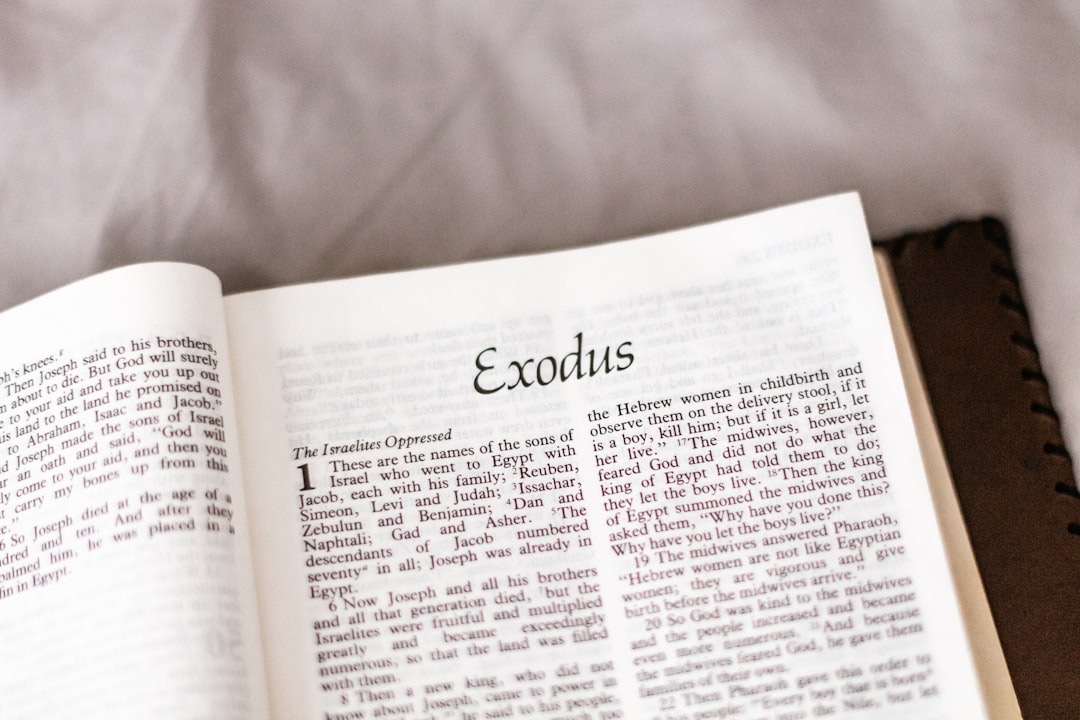
The Plagues: A Systematic Confrontation With Egypt’s Gods
One of the greatest displays of God’s power in the Bible was the ten plagues of Egypt. WOW! However, to truly understand the gravity of God’s masterful composition of the story as a whole, we have to look at it from the perspective of the Israelites and Moses in that time. When Moses first approached Pharaoh with God’s command to release the Israelites, Pharaoh’s response was less than favorable: he only tightened the oppression. The Israelites were forced to make bricks without straw (Exodus 5), which is explained to be a very troublesome task, and extended their workload and days. Any hope they would’ve had towards a former-prince-of-Egypt who came back to rescue them would’ve been dimmed (or maybe even squashed)!
From their perspective, Moses’ intervention seemed to make things worse. Much worse.
Yet this moment set in motion a series of events that would become one of the most profound demonstrations of God’s supremacy in Scripture.
The plagues were not random disasters. Each plague directly confronted a deity that Egypt worshiped. As the Israelites were incorporated into Egypt for over four centuries, it’s very likely they also began to worship these deities. God was challenging the belief system of Egypt and with Israel:
- The Nile turning to blood challenged Hapi, the god of the Nile, showing that Egypt’s lifeline was under the Lord’s authority.
- The plague of frogs mocked Heqet, the frog-headed goddess associated with fertility.
- Gnats from the dust challenged Geb, the earth god, as the dust itself became the plague.
- The swarms of flies undermined Khepri, the insect-headed god associated with creation and life cycles.
- When the livestock were struck, it challenged Hathor and Apis, who were represented by sacred cows and bulls.
- Boils on people exposed the limits of Sekhmet, the Egyptian god associated with healing.
- Hail and fire from the sky directly confronted both Nut and Shu, both connected to the sky, weather, and atmosphere.
- When the locusts devoured the crops, it challenged Nepri, the god associated with grain and harvest.
- Darkness over the land exposed the limits of Ra, Egypt’s sun god.
- The death of the firstborn struck at the very structure of Pharaoh’s authority, who claimed to be a deity himself.
In other words, God was not merely freeing Israel from slavery to Egyptian rule. He was also dismantling an entire spiritual system and freeing Israel from the spiritual oppression of idolatry.
Both Israel and Egypt were being shown something unmistakable: the Lord was not one god among many. He was thee sovereign God (big “G”) over all.
For the Israelites, every plague became a revelation. Their deliverance was unfolding in layers they could not see when the conflict intensified through every plague. The ten plagues were all so necessary to their freedom. However, imagine their heartache when Pharaoh—again and again—continued to say “no” to their freedom. Yes, they were seeing the miraculous! But they were also hearing a reinforcement to their enslaved minds that freedom was impossible for them. Each “no” would’ve been another shot at their hope for freedom.

The Red Sea: When God Leads You Into an Impossible Place
It wasn’t just the plagues that would’ve felt like a major setback for the Israelites and Moses. One of the most striking moments in the Exodus story occurs just after Israel finally leaves Egypt. They were granted freedom. Finally. Now, instead of leading them along a straightforward route to safety, God directs them toward the Red Sea (Exodus 14). Imagine what the Israelites (and maybe even Moses) thought as they saw the Red Sea approaching on the horizon.
To make matters worse, behind them, Pharaoh had changed his mind and sent the Egyptian army after the newly freed slaves.
Behind them, an angry army filled with men who had been put through ten horrible plagues, including the loss of their firstborn sons. Ahead of them, an uncrossable body of water. From a human perspective, this would have looked like a major setback and poor strategy on the Lord’s part!
Picture it: Panic spreading throughout the camp. Many of them accusing Moses of bringing them into the wilderness to die. As this heartwrenching setback hits, hopelessness strikes again.
Yet this situation, along with the precise location, became the stage for something unforgettable.
God parted the sea in spectacular, grandiose fashion. A pathway opened through waters that had previously been impassable. Israel walked across on dry ground. All while a pillar of cloud and fire held the Egyptian army at bay.
Freedom at last!
But then, the pillar of cloud and fire that had been protecting the belabored Israelite hoard while crossing the sea moves aside and allows the Egyptian army to chase after them. Another setback! Hopelessness returned. Imagine feeling the disappointment of, yet again, the hope of your freedom hanging in the balance of how quickly the Egyptian chariots could close the distance between the pursued and the pursuer.
But then, in an instance, Moses stretched out his hand, and the army pursuing them was suddenly and victoriously swallowed by the returning sea.
Without the detour into the wilderness and having their backs against the sea as the angry Egyptian army grew closer and closer, this tremendous display of God’s power wouldn’t have been possible. The situation appeared to be a tactical mistake by the Lord, but this ended up being the platform for the most powerful demonstrations of God’s deliverance recorded in Scripture.
And notice something important: Israel could not manufacture this victory. They could only walk forward into what God was doing and endure each seeming setback.

The Pattern We Often Miss
The Exodus story shows a pattern that repeats throughout Scripture: God often works in ways that are hidden and unknown as events unfold in our lives.
We (and everyone else who has followed God throughout history), living in the moment, rarely understand the full meaning of what He is doing. Clarity usually comes later, when the story has moved forward, and the threads begin to connect. This is throughout Scripture, history, and the lives of people today.
Losses, delays, unexpected turns, and painful chapters can feel like signs that something has gone wrong in the story. Yet those same moments may be part of the very process through which God prepares a future deliverance or testimony that could not exist by any other way.
We rarely see the full architecture of what God is building while the work is happening, but Scripture repeatedly shows that He is working.
How to Reframe Hard Seasons in Your Own Life
When hardship arrives, the goal is not to pretend the situation feels easy or painless. Faith is not a “fake it ‘till ya make it” kind of thing. Look at the Exodus story: the Israelites cried out in fear and wrestled with confusion. Their emotions were real! So are yours when hardships come.
However, it’s important to shift your perspective on hardships from seeing them as setbacks to seeing them as opportunities for growth and as platforms for God’s glory. The Israelites couldn’t get out of the mindset of seeing every hardship as a major setback. This led to constant complaints, doubts, and—eventually—their banishment to wander the wilderness of another forty years.
So, here are four ways you can begin to shift your perspective so you do not miss what God may be doing beneath the surface.
1. Pay attention to what God might be revealing, not just what might be going wrong.
In the Exodus story, God did more than remove Israel from Egypt. He revealed His power, authority, and character along the way. He had to tear down the idols within the hearts and minds of the Israelites.
Hard seasons often uncover places in your life that comfort and stability once hid. It exposes what you have trusted, feared, and where you have struggled to believe God’s promises. Those revelations can become the beginning of a transformation in your heart.
James writes that the “testing of faith produces endurance” (James 1:2–4). What feels disruptive or inconvenient is actually the formation of something long-lasting within you. So pay attention and ask God: “What are you revealing in me and to me?”
2. Resist the urge to interpret the story too early
The Israelites often assumed they understood what was happening before the situation had finished unfolding. And, unfortunately, their assumptions were always towards the “freak out towards God and demand they return to Egypt” side of things.
If we are honest with ourselves, we do the same.
When a door closes or a season becomes difficult, it is easy to assume the outcome has already been decided—or even worse! That God has completely forgotten or abandoned us. Yet Scripture consistently reminds us that God’s timing and perspective are different from ours.
Isaiah writes, “My thoughts are not your thoughts, neither are your ways my ways” (Isaiah 55:8–9). When the hardships hit, rushing to your own conclusions and assuming we know what all of these “setbacks” mean only results in negativity, complaints, and “take me back to Egypt!” mindsets. Our own interpretations of hardships actually cripples our movement forward and poison our gratitude for what God is working out in our story.
However, by allowing space and time for the story to unfold while still trusting God’s process, we are protected from drawing conclusions that later prove incomplete and worthless.
3. Look for the quiet evidence of God’s activity
Even when God’s work is not dramatic, there are often small signs that He is present and actively working on your behalf.
A timely word of encouragement. A passage of Scripture that seems to meet the exact moment you are living in. A conversation that redirects your thinking. A worship song with lyrics that hit you right “in the feelings.”
These small moments can become reminders that the story is still moving.
Psalm 77 describes the mystery of God’s work this way: “Your way was through the sea, your path through the great waters; yet your footprints were unseen” (Psalm 77:19). His footprints were unseen… but there were still footprints. God’s fingerprints and footprints are all over the pieces of our lives, especially the hard times.
Don’t give up hope when the trials of this life come. Instead, look for the small pieces of evidence that He is indeed working behind the scenes. And, embrace the reality that sometimes God’s path is invisible until much later.
4. Anchor your perspective in what God has already done
In the midst of scary, seemingly impossible situations, we cannot know what God will do in the future. However, we can be encouraged by looking back at all that God has done.
Throughout the Bible, Israel repeatedly returned to the memory of the Exodus as proof of God’s faithfulness. The story became a reference point for future generations.
The same applies to us: when we face difficult seasons, remembering past moments of God’s faithfulness can stabilize our perspective. The same God who worked in earlier chapters of your life has not stopped working now. He will not abandon you now. If He brought you through the hardship in the past, He will do it again. He doesn’t stop working on your behalf! The promise of Romans 8:28 isn’t a “one-time” thing.
The Chapter You Are Living Now
When the Israelites received a “no” from Pharaoh again and again and again (on through #9!), they could not see the outcome of what God was doing. They only saw the setback.
When they stood on the shore of the Red Sea, they could not yet see the outcome. They only saw the setback.
When Pharaoh’s army pursued them to the Red Sea, they stood between an army and an ocean, feeling trapped. They only saw the setback.
When the army chased them through the Red Sea, they feared they would be slaughtered. They only saw the setback.
But God was working. He had already begun writing the next scene.
The same truth applies to the chapters we are living in now. What appears to be a setback may actually be a setup for something God intends to reveal later in the story.
And when that moment arrives, you may discover that the very place where you thought the story was falling apart was actually the place where God was quietly preparing the victory.
When the trials come, don’t see them as setbacks. Because Israel only saw each hardship as a setback, it crippled their thinking and poisoned their hearts towards the Lord. It ended up costing them the Promised Land and their destiny. That generation of Israelites is forever remembered in history as the rebellious generation that, despite seeing God’s greatest works of miraculous power, still focused on setback and misery.
Don’t be like the Israelites in the Exodus story.
Shift your focus. Don’t see the hardships and trials as setbacks. Begin praying for whatever work God has in store for your story. And prepare your heart and your life to be the platform for all of God’s wonders that He will work through your story.
Reflection
I would love to hear your thoughts on this subject. Here are some questions to get you thinking. Please feel free to comment below.
- What is one moment in your life that felt like a setback, but later became part of God’s bigger story?
- What is one “Red Sea moment” you’ve walked through in your life? When you feel like your back is against the wall, and you respond with fear or complaints, but God uses that very moment as a platform for His power?
- Which part of the Exodus story encourages you the most when life feels uncertain?


Leave a Reply